
Why school fair desserts need a different plan
A school fair is not a sit-down occasion. You are serving parents, learners, teachers and siblings at the same time, often in a short window between performances, raffle draws and sports matches. That means dessert service has to be quick, easy to portion and simple to manage when 200 people turn up at once.
Taiwanese-style shaved snow ice works well because it is light, cold and easy to adapt for younger children or adults who want something a bit more interesting than a standard scoop. The texture is soft and fluffy, so it feels special without being heavy after a full lunch or braai. In our climate, especially in Durban and Umhlanga, that matters because warm afternoons can make ordinary desserts melt fast and turn queues into a mess.
For schools, the best dessert service is one that keeps moving and does not need a lot of extra handling. That means clear portions, tidy toppings and a setup that fits into the school grounds without blocking walkways or creating a safety issue.
Choosing flavours that work for children and adults
At a school fair, flavour choice needs to be broad enough for mixed ages but not so wide that service slows down. A focused menu is easier to manage and still gives people enough variety. Flavours should be familiar, bright and easy to pair with toppings.
- Fruit-led flavours for a fresh, lighter option
- Chocolate, vanilla and milk-based flavours for familiar taste profiles
- Strawberry, banana and tropical combinations for younger children
- One or two richer options for staff and parents
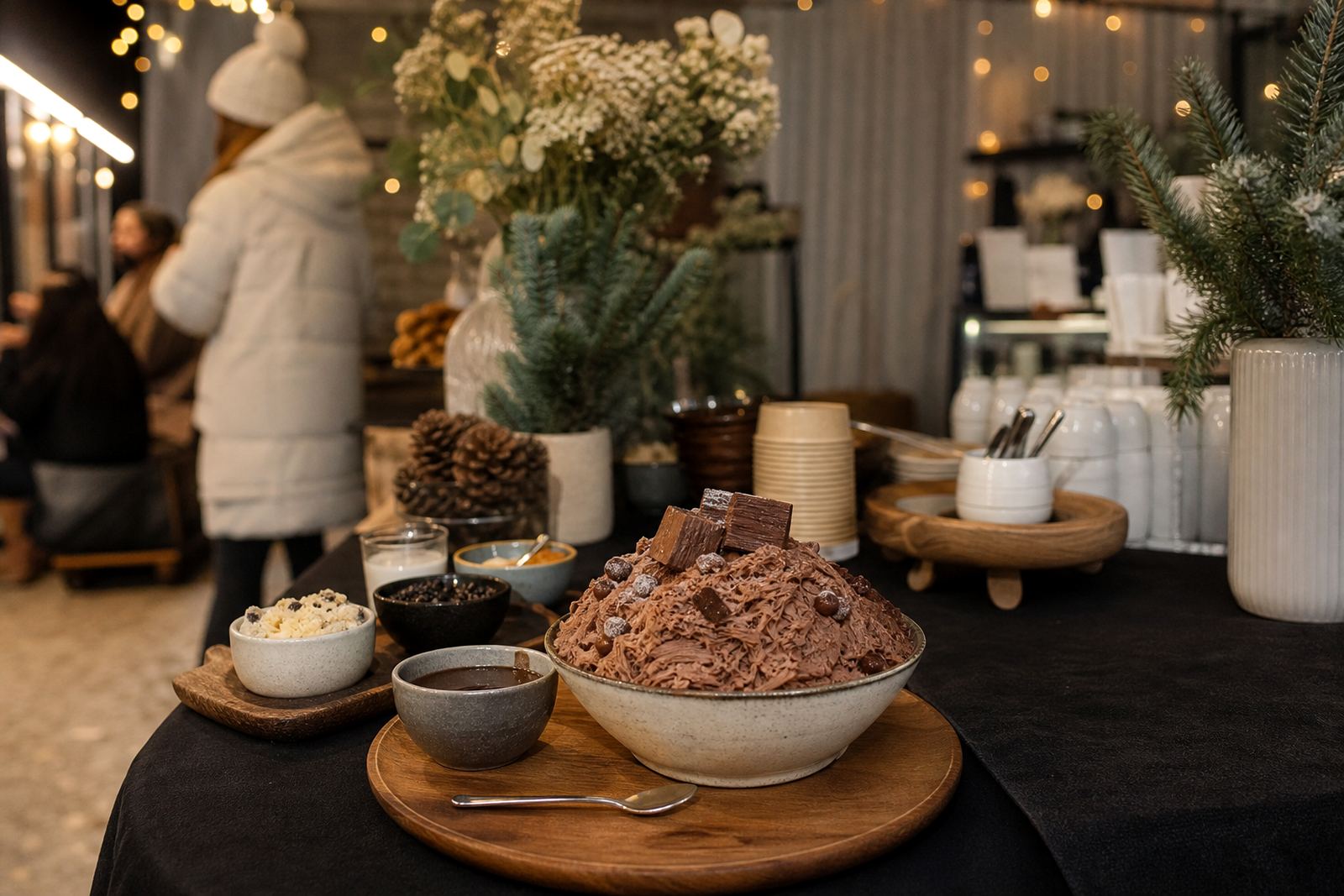
It helps to keep allergy and ingredient notes visible, especially where nuts, dairy or coloured toppings are involved. Schools often have children with different dietary needs, and clear communication makes service smoother for everyone. A simple topping board, with items separated and labelled, can save a lot of questions at the counter.
If you expect a lot of first-time customers, choose flavours that are easy to explain. A child should be able to point to something and know what they are getting, while a parent can still customise the cup to suit their own taste.
How to handle queues without slowing the fair
Queues can make or break dessert sales at school events. The aim is not to move people through in a rush, but to keep the line short enough that they do not give up and walk away. A good flow depends on where the serving point is placed, how orders are taken and how many hands are on duty.
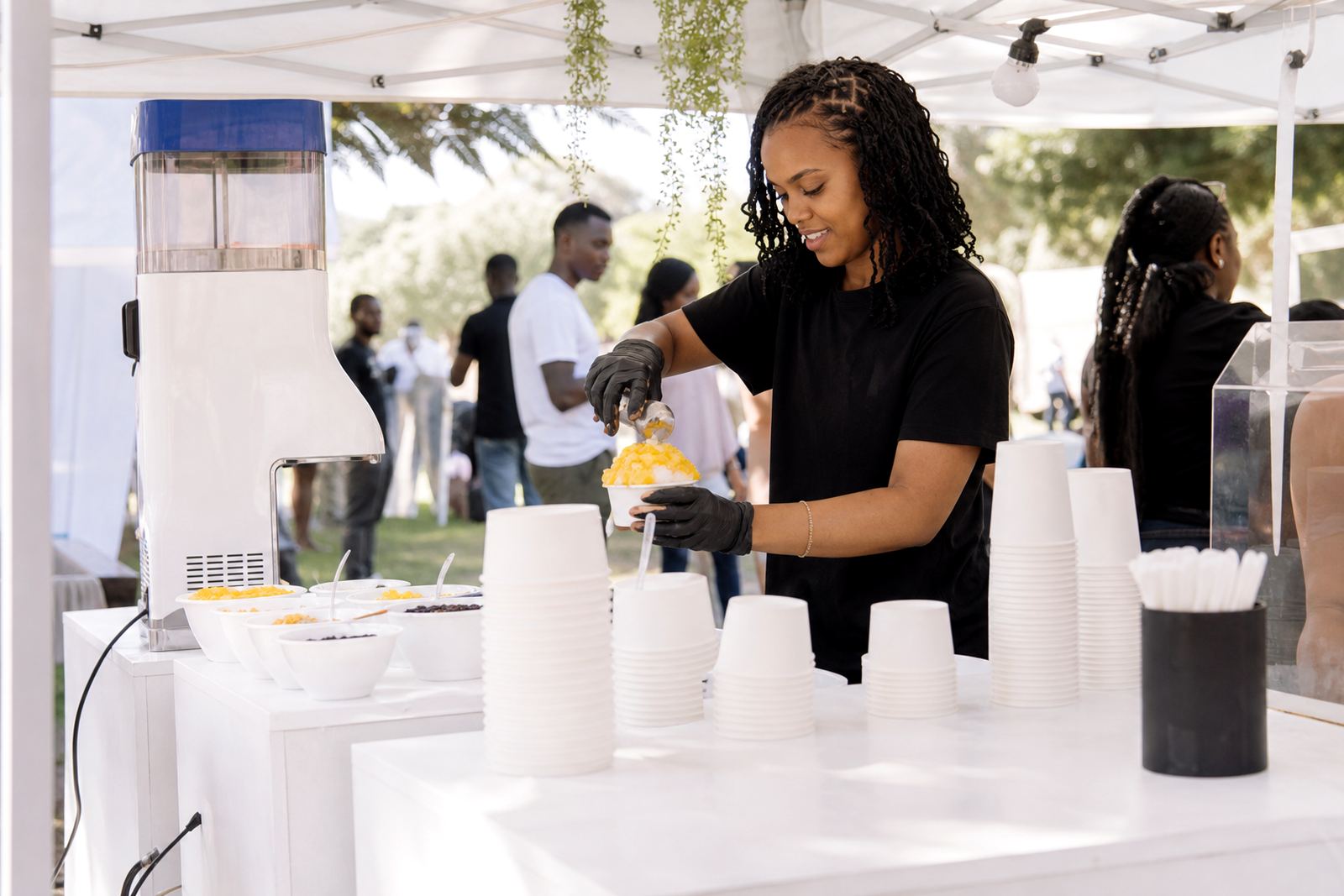
A live serving station can work well because children enjoy seeing the dessert prepared in front of them, while the team can control portions and topping amounts. For very large crowds, drop-off dessert cups are even faster because they can be handed out in seconds. That can be useful when the fair is happening alongside a tuck shop, stage programme or sports day.
- Place the service point near a shaded area if possible
- Keep the queue one direction only, with clear entry and exit points
- Use pre-portioned cups for peak times
- Have one person managing orders and another handling toppings
On school grounds in places like Ballito or Johannesburg, space can be tight, so it helps to plan around foot traffic, toilets and parking. The better the flow, the less likely the dessert station is to cause congestion near classrooms or play areas.
Practical serving ideas for warm weather and load-shedding
South African school events often run in heat, and sometimes with load-shedding in the middle of service. That means the dessert plan must be practical from the start. Cold desserts need a stable setup and equipment that can keep serving without drama if the power supply shifts during the afternoon.
Snow ice is a useful option because it is made for quick service and does not feel as heavy as many other sweet treats. For outdoor fairs in Durban or Pietermaritzburg, it is also helpful because it gives learners something refreshing after being in the sun. Of course, the dessert still needs shade, enough ice storage and a crew that can work fast if the crowd builds up suddenly.
For better control, match the service format to the event size. Small school fundraisers might do well with a simple cup menu, while a larger annual fair may need a live station plus ready-made cups for the busiest hour. That way you dont get caught short when everyone arrives after the concert ends.
What school organisers should confirm before the day
Good planning starts with a few clear details. Once those are confirmed, the dessert service can be tailored to the site and the crowd size. Schools in Gauteng and KwaZulu-Natal often have different layouts, but the same basics still apply.
- Expected number of learners, parents and staff
- Event time and peak serving period
- Available power and backup arrangements
- Space for a serving table or food trailer access
- Any school rules on food, waste and access control
- Whether you want a pay-as-you-go setup or prepaid servings
It also helps to think about waste removal and clean-up. Schools usually need the grounds to be tidy by the next morning, so disposable cups, napkins and bin placement need to be included in the plan. If the fair is in a hall, you may also need to protect floors and manage wet surfaces near the serving area.
A local example: a Durban school fair with mixed age groups
A typical school fair in Umhlanga or Durban might start with a dance display, then move into food stalls, a lucky draw and a prize-giving. The dessert station has to fit around that programme and keep serving during the busiest half hour after the performance. Younger children usually want something colourful and sweet, while teenagers and adults often want a more textured dessert with a few extra toppings.
In that setting, Snow Cream can set up a live serving station or pre-packed cups depending on the venue size. The organiser gets a dessert option that feels special without creating a long wait, and parents can buy a treat without standing in a queue that stretches across the whole courtyard. That balance matters at school events, because people want to enjoy the day not spend it waiting.
For schools planning annual fairs, sports days or class fundraisers, a dessert supplier should make things simpler, not harder. The best service is the one that fits the schedule, keeps children happy and gives the organisers one less thing to worry about.