

Why Snow Ice Pulls Crowds at Market Days
At a market, the first sale is usually made before the customer even gets to the counter. Snow ice helps because it looks different, serves fast, and gives people something cold on a hot Durban morning or a sticky summer afternoon in Johannesburg. The light, fluffy texture works well where shoppers are browsing, sampling and deciding on the spot.
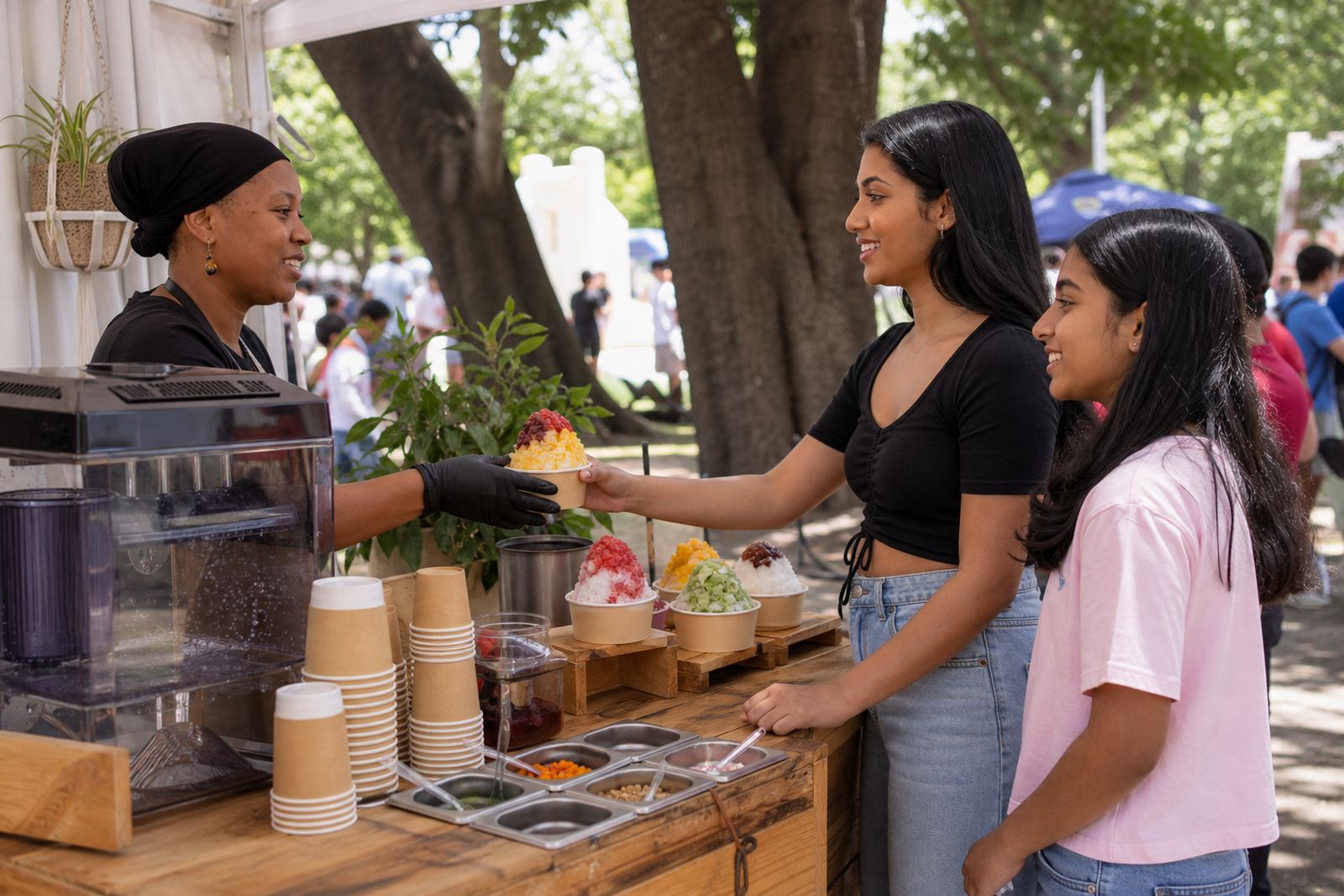
Snow Cream is a good fit for craft markets, weekend food markets, school fundays and community trading days where visual appeal matters. A bright topping display, neat serving tubs and a visible live station can turn passing foot traffic into repeat purchases. In KwaZulu-Natal, coastal humidity and heat make cold desserts especially appealing, while inland market days often benefit from shaded seating and quick handover service.
For organisers, this type of dessert is practical because it can be scaled up or down depending on the crowd. A small market table in Umhlanga is handled differently from a busy Sunday market in Sandton, but the product still works in both settings. The main thing is speed, neat presentation and a clear flow from ordering to collection.
Typical Set-Up for a Trading Stall
A market-day setup should be compact, easy to move and ready for power interruptions. A good snow ice stand usually includes a serving counter, cold storage, topping trays, a handwash point, signage and a clean queue line. If the market has limited electricity, the plan needs to account for load-shedding or generator use, especially if you are trading for several hours.
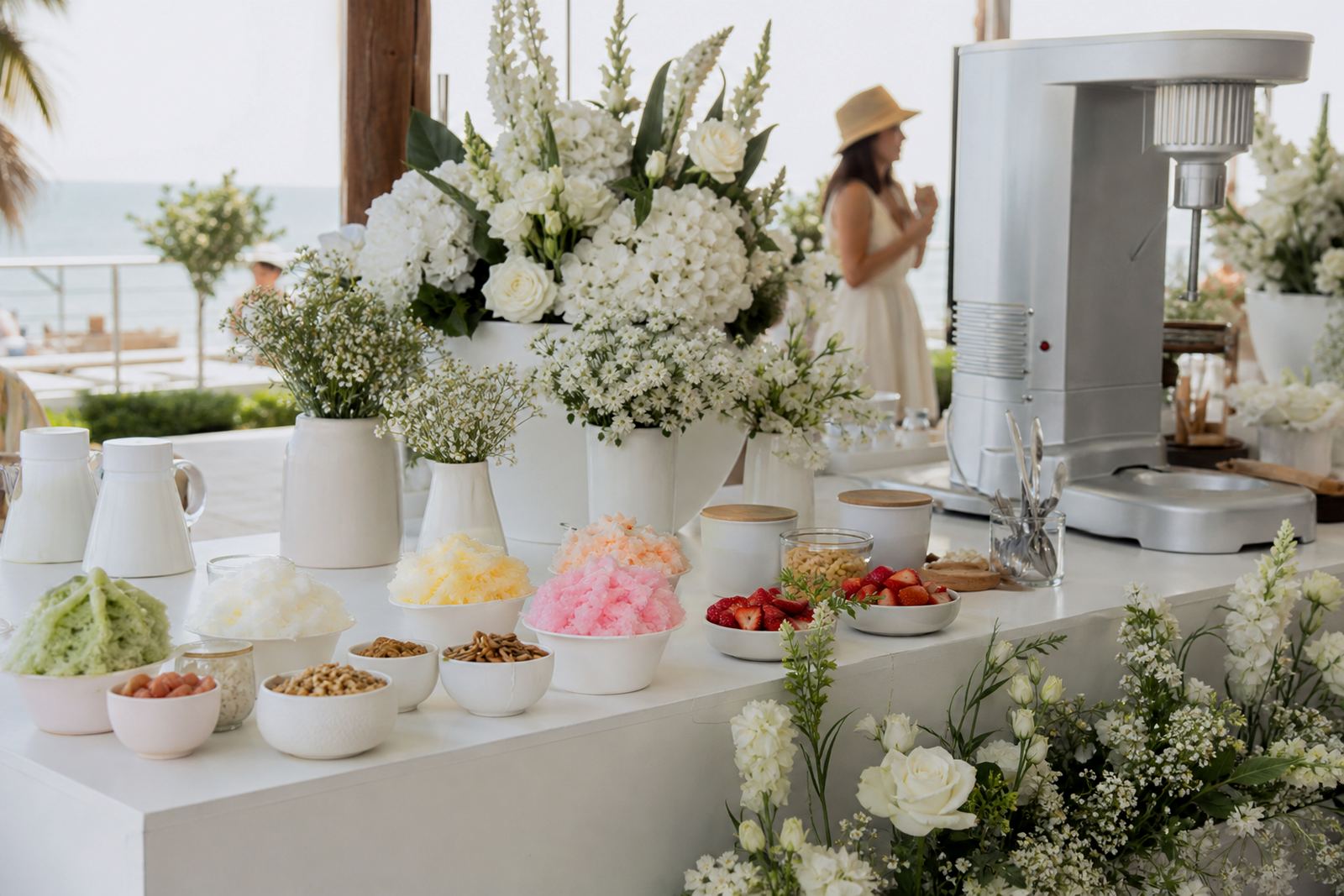
Snow Cream can support a live serving station or a simpler drop-off dessert cup format. Live serving draws attention and suits busier markets, while pre-packed cups are better when foot traffic is steady but the stall space is tight. For open-air events in Ballito or Pietermaritzburg, shade is important, because direct sun can affect both staff comfort and product handling.
- Counter space for serving and payment handling
- Cold holding equipment or insulated storage
- Topping tubs with lids for dust and humidity protection
- Fresh water and hand hygiene area
- Queue markers or signage for smoother movement
- Waste bins placed away from the customer line
If the market is held on municipal grounds or in a mall forecourt, the organiser may require trading approval, fire compliance and waste disposal planning. It is worth checking these details early so setup time is not wasted on the day.
Layout Advice for Busy Foot Traffic
The best layout is one that lets people see the product, place an order, and move out without blocking others. A common mistake is placing the whole operation too far back from the walkway. You want the front of the stall open and inviting, with menus and flavour boards visible from a distance. People often decide while still walking past.
Keep the menu simple for market trading. Too many choices slow down service and make queues longer. A focused menu of a few snow ice flavours, a handful of toppings and one or two specials is usually enough. At bigger trading days, especially in Johannesburg and Sandton, grouping the most popular options nearest to the front of the counter helps the team move quickly.
For layout, think in zones: order, build, hand over, and clean-up. The team should not cross paths in a way that causes delays. If you are doing a homegrown market, school event or festival day, a compact station with one serving point and one collection point often works better than a wide open table with no flow.
- Put the menu where people can read it without stopping the whole queue
- Keep toppings covered when not in use
- Separate cashless payment handling from the serving area
- Leave a clear route for staff to restock from the back
- Use shade cloth or a gazebo where the venue allows it
Common Mistakes That Slow Sales
One common mistake is underestimating how quickly the crowd builds once the market gets busy. If stock is not organised, a small queue can become a long one. Another issue is setting up for show rather than function. Pretty displays are helpful, but if the serving process is awkward the line will move too slowly and people may walk away.
Another problem is not planning for weather. KwaZulu-Natal markets can get hot and humid very quickly, while Gauteng can bring strong sun and sudden changes in temperature. Staff need water, shade and enough space to work safely. If power is unreliable, you also need a back-up plan for keeping product in good condition throughout the day.
Do not forget the practical side of market rules either. Some venues have strict setup times, rubbish removal expectations and restrictions on open flames or noisy equipment. If the event is in a mall activation space or a council-managed venue, it helps to know the guidelines before the truck or staff arrive.
Finally, avoid over-ordering the wrong type of stock. Market days are unpredictable. A good trader watches the crowd and adjusts. It is better to have a tight, popular menu and repeatable process than a long list of options that are difficult to keep moving.
Budget Ranges for Market Day Catering
Budget depends on the size of the market, the number of servings, whether live station service is required, and how much setup support is needed. For a smaller community market or school trading day, a basic drop-off dessert cup package may start from around R3 500 to R7 500. This is usually suited to short trading windows and lower guest numbers.
For a live serving station at a busier market in Durban, Umhlanga or Ballito, budgets often sit in the R8 000 to R18 000 range depending on serving volume, staff and equipment. Larger activations, multi-day markets or event weekends in Johannesburg and Pietermaritzburg can move into the R20 000 plus range, particularly if custom menu planning, transport and event setup service are included.
Costs are influenced by a few practical factors:
- Estimated guest numbers and serving speed needed
- Distance from the Umhlanga base to the venue
- Need for extra equipment or cold holding
- Staffing for live serving or queue management
- Venue rules, access times and parking constraints
For organisers, the cleanest way to plan is to start with the crowd size, trading hours and space available, then match the service format to that. That keeps the budget realistic and helps avoid surprises on the day.
How Snow Cream Fits Different Market Types
Snow Cream works well for a wide range of trading environments because the format can be adjusted. At a weekend craft market in La Lucia or Hillcrest, the stall may be compact and visually strong, with quick turnover and a short menu. At a larger community event in Johannesburg, the focus may shift to speed, more stock and stronger queue handling.
The team can support birthday catering, corporate catering, school event catering, festival catering, mall activation catering and home party catering, but market days are one of the most natural fits for the product. The dessert is light enough for browsing customers, yet noticeable enough to attract attention from a distance. That is useful when trading alongside many other vendors.
If you are planning a market day, Snow Cream can assist with custom menu options, large group catering, drop-off dessert cups, live serving station service and event setup service. Clients usually reach out through the enquiry form on the contact page, and the planning conversation can then focus on the venue, serving numbers and timing.
For market organisers, the biggest advantage is simple: a dessert that looks good, serves fast and gives people a reason to stop. That is what helps a stall move from being just another table to being one of the busiest spots at the event.