
School Fair Brief in Durban
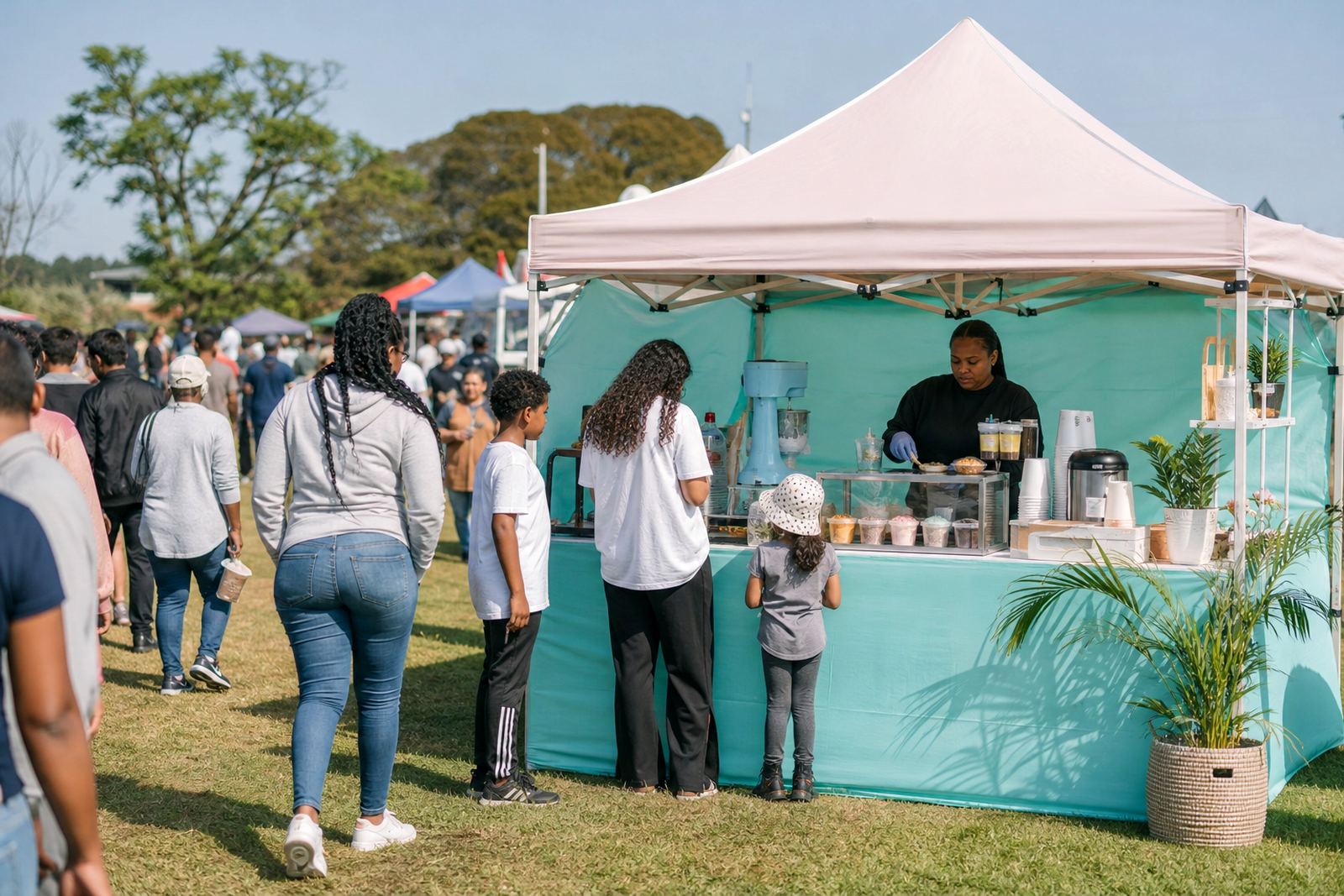
The client was a school in Durban planning a high-footfall fair with food stalls, games and a steady flow of learners, parents and teachers. They needed a dessert stall that could cope with a rush after sports demos and prize giving, while still looking neat enough for a family event on school grounds.
The brief focused on speed, portion control and clear pricing. The fair ran during the afternoon, so we also had to plan for warm KwaZulu-Natal weather, a mix of adults and children, and a site where power points were limited and foot traffic changed by the hour. The school wanted something lighter than ice cream, with a fun format that worked in Durban humidity and did not melt into a mess after five minutes.
- Event type: school fair and fund-raising day
- Town: Durban, KwaZulu-Natal
- Service style: quick-serve shaved snow ice cups
- Goal: keep queues moving and reduce waiting time
We treated it as a service-speed project first, then a dessert project second. That approach made all the difference, because at a school fair the line can build fast and once it does, people start walking away.
What the School Needed on the Day
The school asked for a menu that would appeal to younger children and still feel worthwhile for parents buying for the family. They also wanted fewer moving parts at the point of sale, because the fair had several stalls running at once and staff needed to manage gate entry, tokens and table service without confusion.
Our answer was a short menu with clear flavour choices, a standard cup size and a topping set that could be applied quickly. We kept the setup simple so the serving team could work in a steady rhythm, even when the queue stretched past the stall front. It meant less guessing, less delay, and cleaner hands on the day.
- Simple flavour selection for fast ordering
- Single cup size for consistent portions
- Topping choices kept to a practical range
- Service layout planned for school hall access and outdoor flow
This kind of event does not need complicated options. It needs good product, fast handing over, and a system that teachers and volunteers can trust without micromanaging every cup.
Setup, Service and Timing
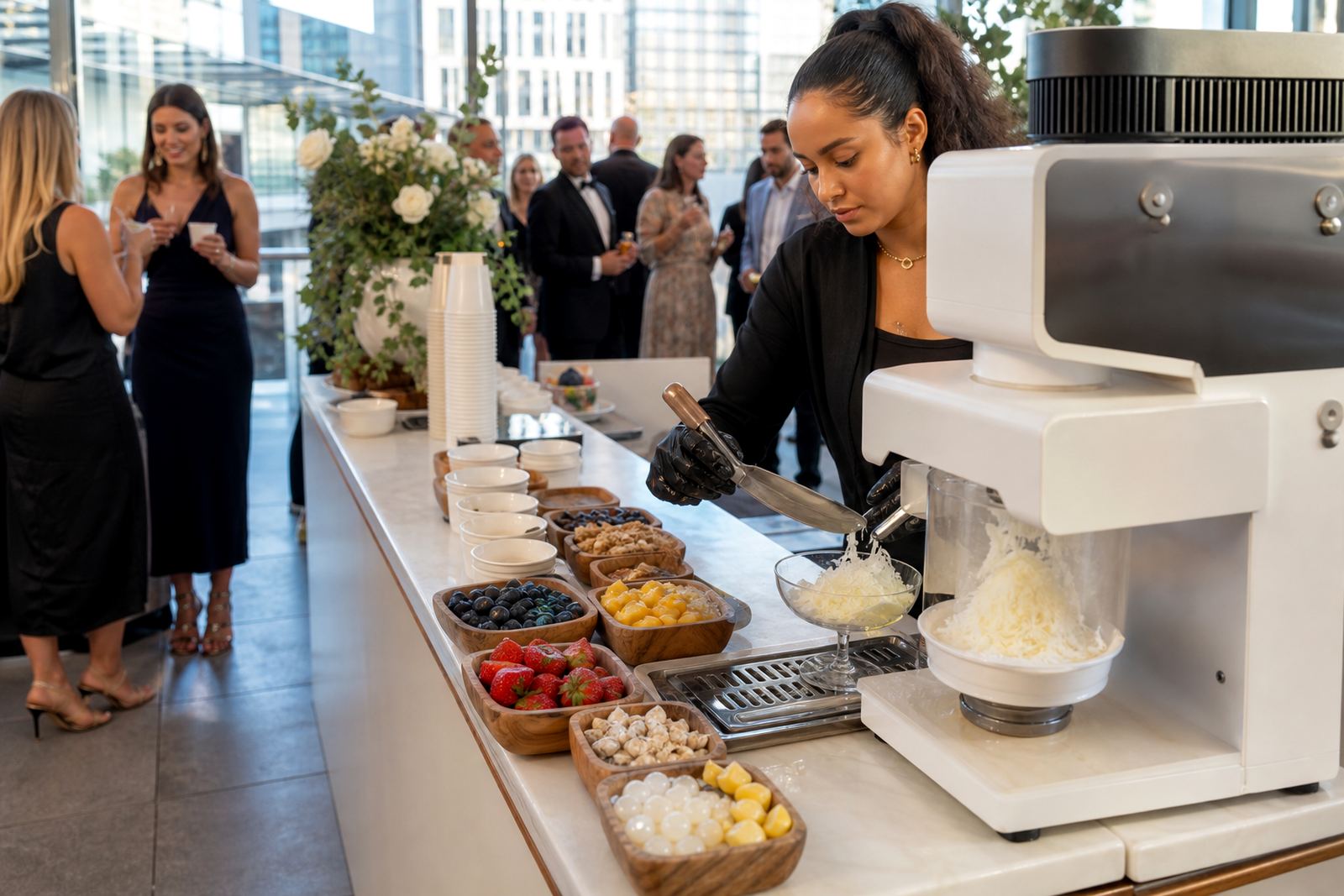
We supplied a live serving station with a compact footprint so it could fit neatly beside the main fair traffic without blocking access. The station was arranged for quick reach, with ingredients placed in order of use and serving tools kept close to hand. That reduced movement, which matters when you are preparing cup after cup in short intervals.
The event ran on a one day schedule, with prep completed before opening and the core service window timed around the busiest part of the afternoon. We allowed for a warm spell later in the day, so the team worked with chilled holding and efficient replenishment. In Durban weather, that planning matters because a stall can go from comfortable to sticky very quickly.
Our team also kept the frontage tidy through the rush. Containers, napkins and cups were restocked in smaller batches so the counter stayed presentable, not crowded with boxes. A clean stall helps trust, and at a school fair parents notice that straight away.
- Setup completed before the fair opened to the public
- Live serving station placed for easy queue access
- Replenishment done in smaller, regular batches
- Prepared for warm weather and outdoor holding conditions
Portion Control That Kept the Queue Moving
The most important result was speed. Quick portions helped us serve steadily through peak periods, so the line kept moving instead of stalling at the front. That was the point of the whole exercise, and it worked because each serving step was kept tight and repeatable.
We used a portioning approach that gave each cup a consistent look and size. The servings were light enough for children to finish easily, but satisfying enough that families felt they got value for money. Because the cups were handed over quickly, the fair did not suffer the usual slowdown that happens when one order takes too long to assemble.
There were no major bottlenecks at the stall, and the team could keep pace through the busiest stretch. That meant the school got a dessert station that supported the event instead of competing with it for attention. A fair only works well when each stall pulls its weight, and this one did just that.
Results for the School and Parents
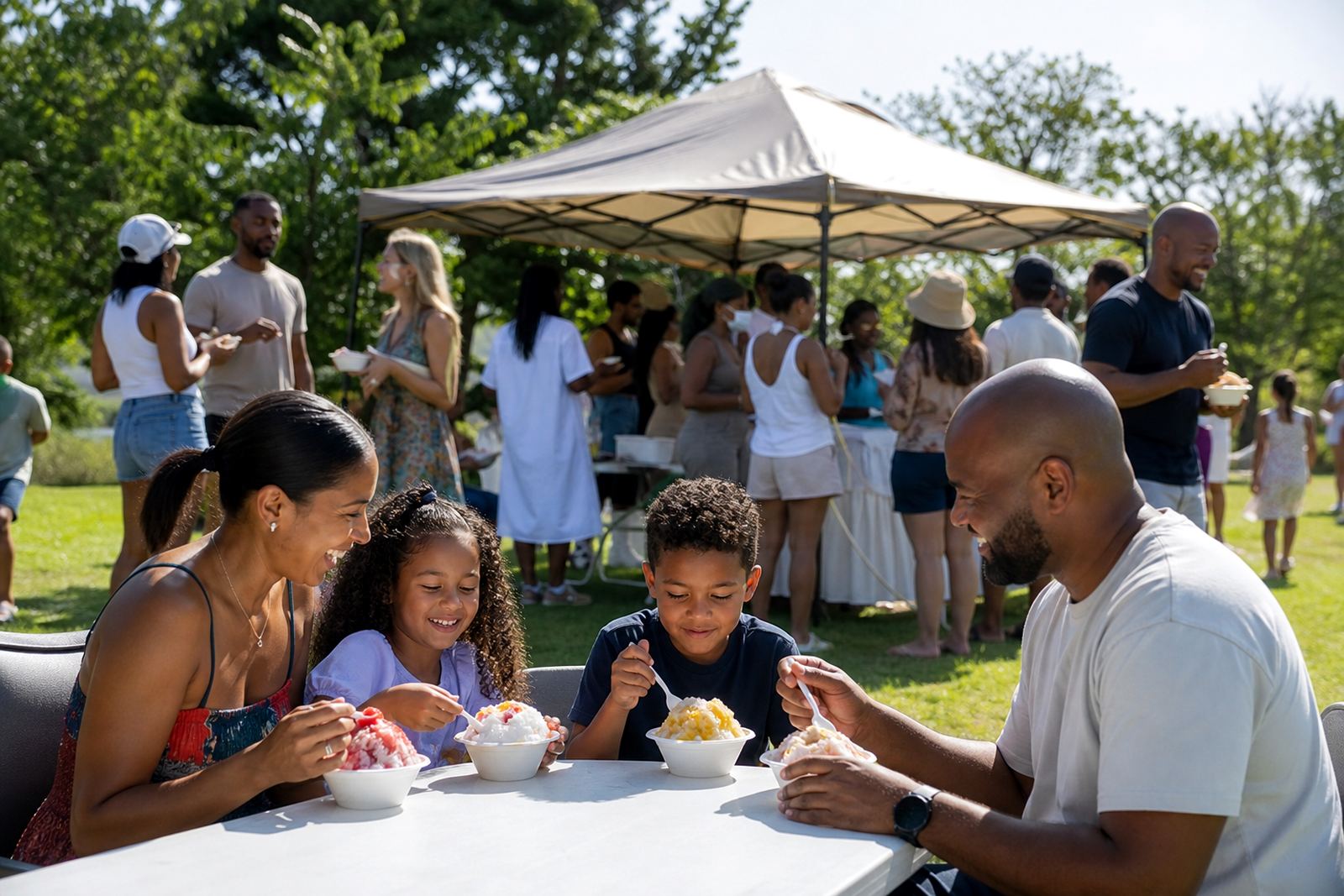
The school reported strong interest from families across the afternoon, with children drawn in by the light snow texture and the chance to choose their own flavour mix. Parents liked that it felt different from the usual fair food and that it could be served quickly without a long wait. The stall also helped the event look more complete, because a dessert point adds movement and colour to a school fair.
From our side, the result was a calm service flow, a tidy counter and good stock control throughout the rush. The organiser wanted a reliable vendor for future fair dates, and the feedback suggested that the speed and portioning were exactly what they needed. No drama, no long delays, just a happy queue and steady sales.
- Fast service during peak fair time
- Neat stall presentation throughout the event
- Consistent serving size for easier sales control
- Positive response from learners, parents and staff
What We Would Do Again
We would use the same short-menu approach again for a school fair in Durban or anywhere else with a busy crowd and limited service space. The key lesson was that speed and consistency matter more than too many choices. When people are queuing with children in tow, they want something tasty, quick and easy to carry.
We would also keep the live serving station format, but allow for even more stock split into smaller holding batches if the event is expected to run longer or if the weather is hotter. In school settings, especially where load-shedding or limited power can affect food stalls, simple systems are usually the safest. Less fuss, less waste, better flow.
If we repeated this fair setup, we would recommend the same planning steps again: arrival before opening, tight menu, clear serving order and a clean handover point. That formula worked well here, and it is a good fit for school events where the queue can build fast and change with every bell.
Key facts
| Project | Durban School Fair |
|---|---|
| Client type | School fair organiser |
| Town | Durban |
| Service | Live Serving Station |
| Timeline | 1 week planning and event day delivery |
| Key result | Quick portions that kept the queue moving |