
Why dessert queues need planning
At an event, the dessert table can either keep the mood moving or become the point where everyone slows down. When guests are excited, they often arrive in a group, ask questions at the same time and want to compare flavours before choosing. That is normal, but it can create a bottleneck if the serving area is too small or the process is not clear.
Good guest flow starts with understanding that dessert is not just food, it is part of the event timing. A school function in Pietermaritzburg, a wedding in Umhlanga or a staff year end in Sandton all need the same basics: enough space to queue, enough staff to serve and enough information for guests to make a quick choice. If those parts are sorted early, people move through with less stress and the host does not spend the whole afternoon watching the line.
- Keep the serving point visible from the main event area.
- Avoid placing dessert right next to a narrow doorway or speaker stack.
- Leave space for guests to pause without blocking others.
- Use clear flavour and topping signs so decisions happen faster.
Set up the serving point where people naturally pass through
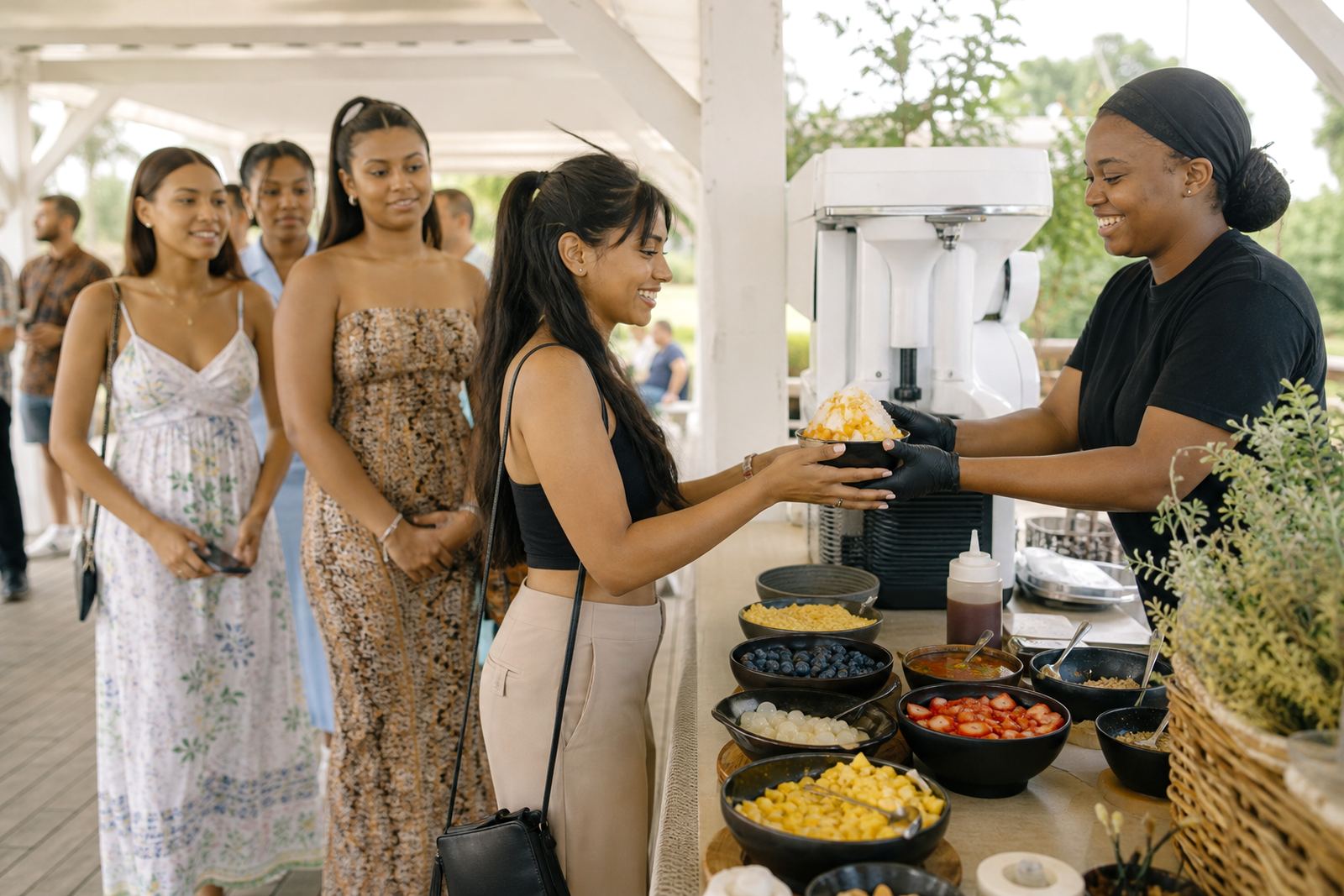
The best dessert station is one that fits the natural movement of the event. People should not have to double back across a dance floor, cross a busy aisle or squeeze past the bar to reach it. In a venue with one main entrance, it often helps to place dessert slightly off the main path so the queue does not block arrivals. In a mall activation or school event, the station should be visible from a distance but set far enough back for a proper line.
For outdoor events, especially in Durban or Ballito where weather can change quickly, shade and cover matter as much as the menu. Heat can soften toppings, while humidity can make packaging less neat if the station is exposed for too long. If load-shedding is a concern, the setup should be positioned so any backup equipment or serving workflow is not interrupted by a power cut. That kind of planning saves time and keeps the line moving when conditions are less than ideal.
- Place the station near the end of a meal or programme break, not at the busiest entrance.
- Allow space for a queue of at least several guests without blocking walkways.
- Use shade, cover or a tent for outdoor functions.
- Keep clear access for setup, restocking and clean-up.
Use a simple ordering structure guests can follow fast
The quickest service is usually the simplest. When guests are asked too many questions at once, the line slows down and people behind them lose patience. A clear order helps: choose a base flavour, add toppings, collect, move on. For larger events, it is often better to offer a focused menu with the most popular combinations rather than every option at once. That way guests can decide in a few seconds instead of standing there weighing up five different choices.
At Snow Cream events, the service works well when the guest experience is organised into small steps. The team can guide choices, answer questions and keep the serving rhythm steady without making the line feel rushed. This is especially useful for corporate catering, wedding catering and festival catering where guests arrive in waves and each group needs to be handled efficiently. A calm, structured flow makes the dessert feel special without slowing the whole event down.
- Offer 3 to 5 flavour options rather than too many at once.
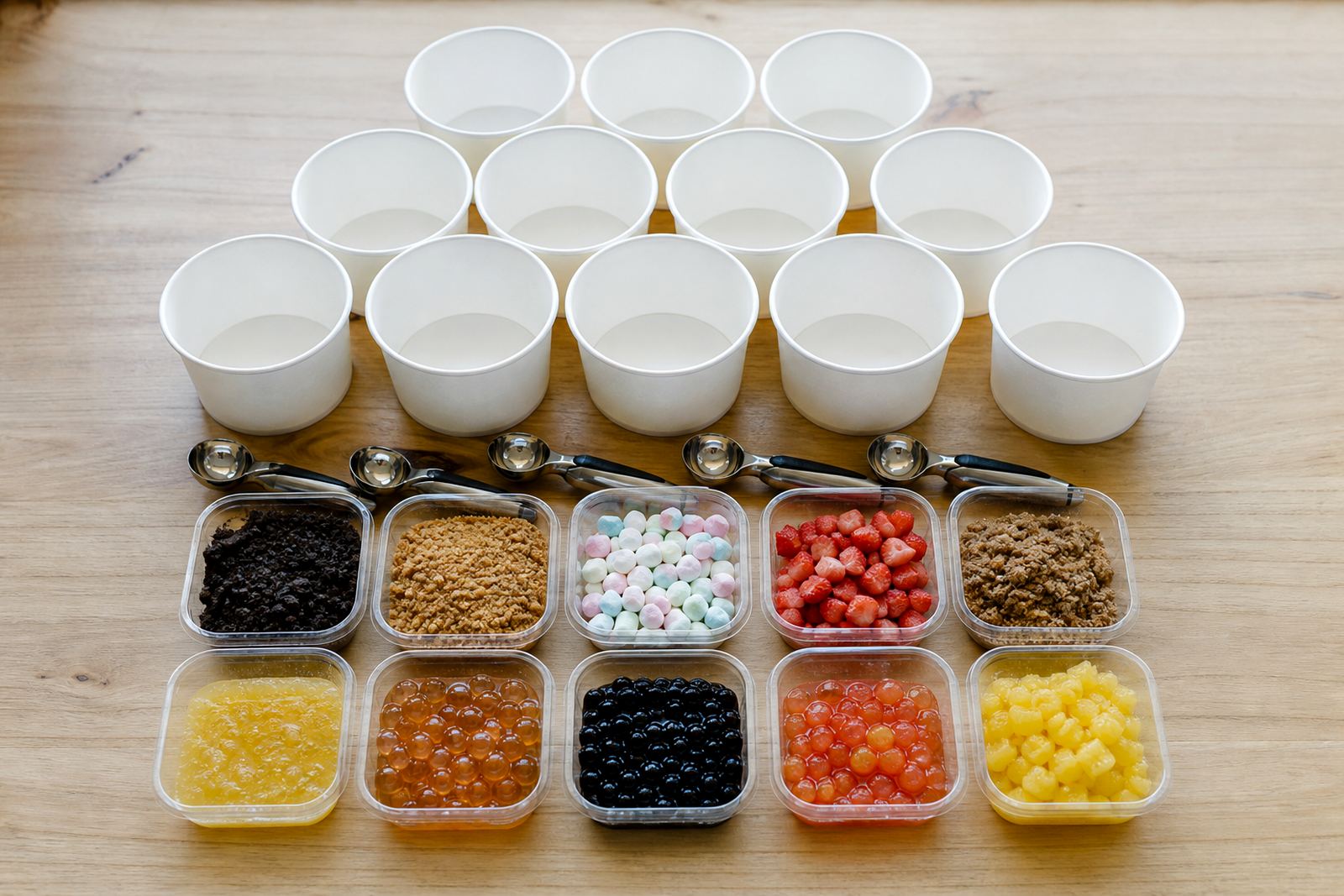
- Keep toppings visible and grouped by type.
- Use one question at a time so guests answer quickly.
- Prepare pre-set options for children, staff functions or large groups if needed.
Match serving style to the size of the crowd
A party of 30 in La Lucia does not need the same dessert system as a 400 guest launch in Johannesburg. The right format depends on the number of people, the time available and whether guests need to stay seated or can move freely. For smaller gatherings, a live serving station adds atmosphere and works well when people are milling around. For bigger groups, drop-off dessert cups or a mixed service plan can keep things moving more efficiently.
If guests are seated at tables, it may be better to serve in rounds rather than invite everyone up at once. For school event catering and festival catering, a clearly controlled queue works better because children and families tend to gather quickly. For corporate catering, people often have a short break and need dessert handed out in a measured, organised way. The key is to avoid sending everyone to the station at the same minute unless the service team and space can handle it.
- Small groups: live serving station with a short queue.
- Medium events: one main station with guided flow.
- Large events: staggered service or pre-portioned cups.
- Formal functions: table timing that fits speeches, meals and photos.
Think about timing around speeches, photos and traffic
Guests do not queue in a vacuum. They move when the programme allows it, so dessert timing should fit the rest of the event. If you start serving just before a speech, the line will break and people will miss the moment. If dessert opens too late, hungry guests may bunch up and crowd the area. The best time is usually after the main meal or during a planned break when people are ready to move.
Local traffic patterns matter too. In Durban and Umhlanga, many guests arrive close to the start time because of work hours and freeway traffic, while Johannesburg events may have late arrivals due to distance and peak hour. That means dessert needs a little flexibility. A good catering plan can handle early demand, then steady service later, without leaving people waiting long. It also helps to brief the host or coordinator so they know when to invite guests forward and when to hold them back for a photo or announcement.
A local example from a busy KwaZulu-Natal function
At a large birthday celebration in Umhlanga, the host wanted dessert available for guests moving between the garden area and the main hall. The team placed the station where people naturally passed after dinner, used a short menu and kept the toppings clearly arranged. Guests could see the options before they reached the front, so most choices were made before they joined the queue. The result was steady movement, no crowding near the entrance and very little waiting time.
That same approach works for weddings in Ballito, school events in Pietermaritzburg and corporate functions in Sandton. The details change from venue to venue, but the principle stays the same: if people know where to go, what to choose and how long it will take, they move with confidence. A dessert service that is planned properly does not just feed people. It helps the whole event run better and keeps the atmosphere relaxed.
Small details that keep the line moving
Once the main setup is in place, the smaller details make the biggest difference. Clean serving tools, enough stock on hand and a team member who can answer questions quickly all help prevent delays. If there are children at the event, it also helps to have a clear waiting point so they do not push in front. For winter events or venues with chilled indoor air, guests may be less patient with long waits, so speed matters even more.
When dessert service is done well, guests barely notice the logistics. They remember that the queue moved, the portions were neat and the experience felt organised. That is what good guest flow should do. It should support the event without drawing attention to itself, so people can enjoy the moment and carry on with the celebration.
- Keep napkins, spoons and packaging close to the serving point.
- Have one person manage the queue if the crowd is large.
- Restock before the station looks low, not after.
- Protect toppings, cups and equipment from heat, wind and moisture.