
Start With Guest Count, Then Trim for Real Attendance
The first number to work from is your expected guest count, but do not stop there. In South Africa, school holidays, traffic, weather and late RSVPs can all shift attendance. For a private birthday in Umhlanga or La Lucia, it is common to plan for 90 to 95 percent of invited guests if confirmations are strong. For public events, markets and mall activations, work more carefully and allow for walk-ins as well as passers-by who may buy on impulse.
A good starting point is one dessert portion per guest for a sit-down function and 0.7 to 0.8 portions per guest for a long event where other food is being served. If your event runs over several hours, people may take smaller serves at first, then return later. That is why portion planning should be linked to timing, not just the headcount.
- Invited family party: plan for 90 to 95% of the guest list
- School or corporate event with other food: plan for 70 to 80% dessert uptake
- Public activation: allow for repeat buyers and walk-up traffic
- Rainy day or load-shedding risk: keep a small buffer for last minute changes
Choose Your Service Style Before You Count Scoops
The service style changes the quantity you need. A live serving station usually moves faster than plated dessert because guests can see the product and make a quick choice. Drop-off dessert cups are easier to count and often work well for schools, meetings and venues with limited access. If you are hosting a wedding in Ballito or a corporate function in Sandton, the style should match the pace of the day and the kitchen or storeroom space available.
With custom menu catering, you can also split your numbers across flavours and toppings so no single option runs short. This matters when children, teens and adults are all at the same event. A mixed crowd tends to create a few clear favourites, so it is wiser to reserve a larger share for the most popular flavours and keep a smaller balance for niche choices.
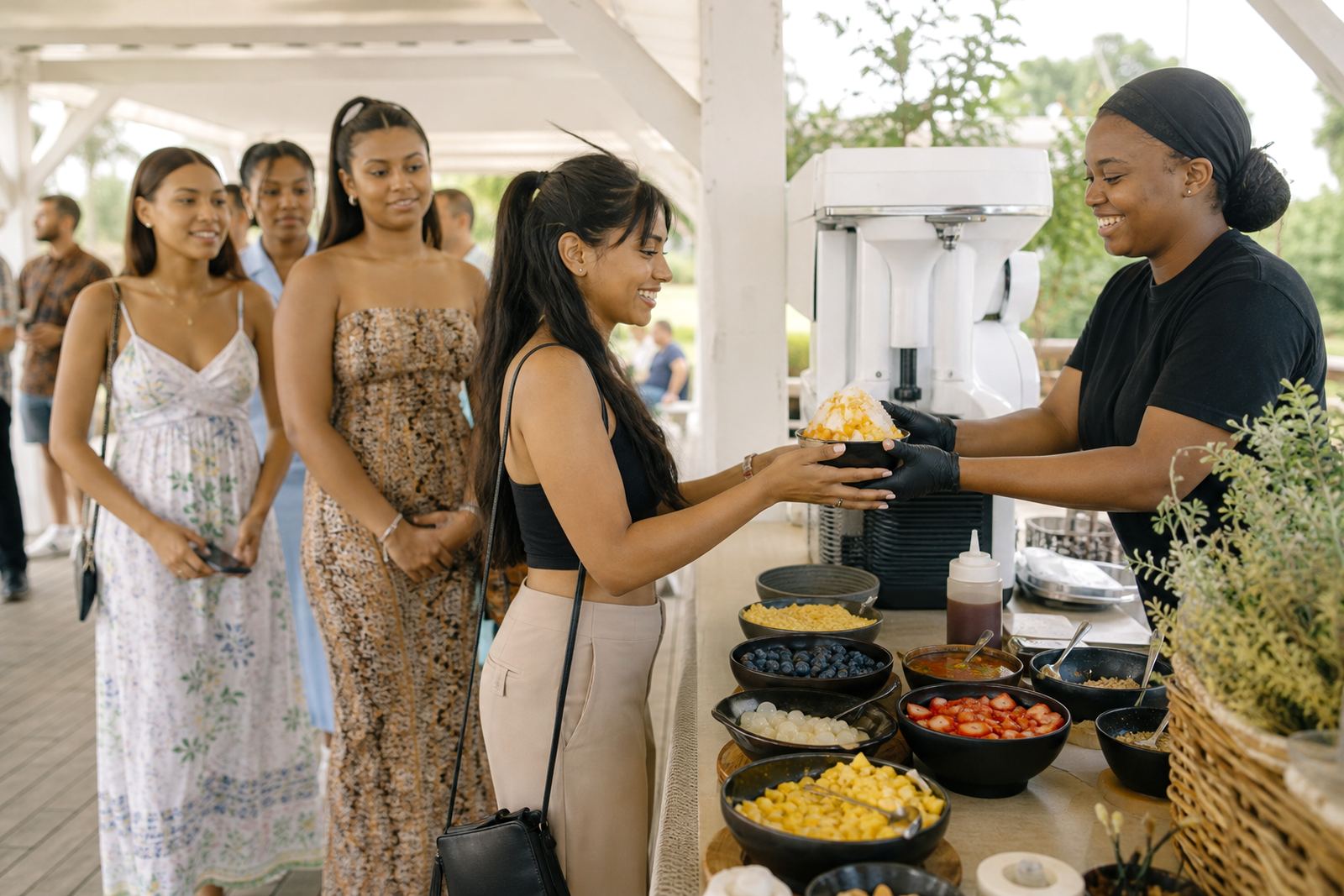
- Live serving station: best for higher foot traffic and social events
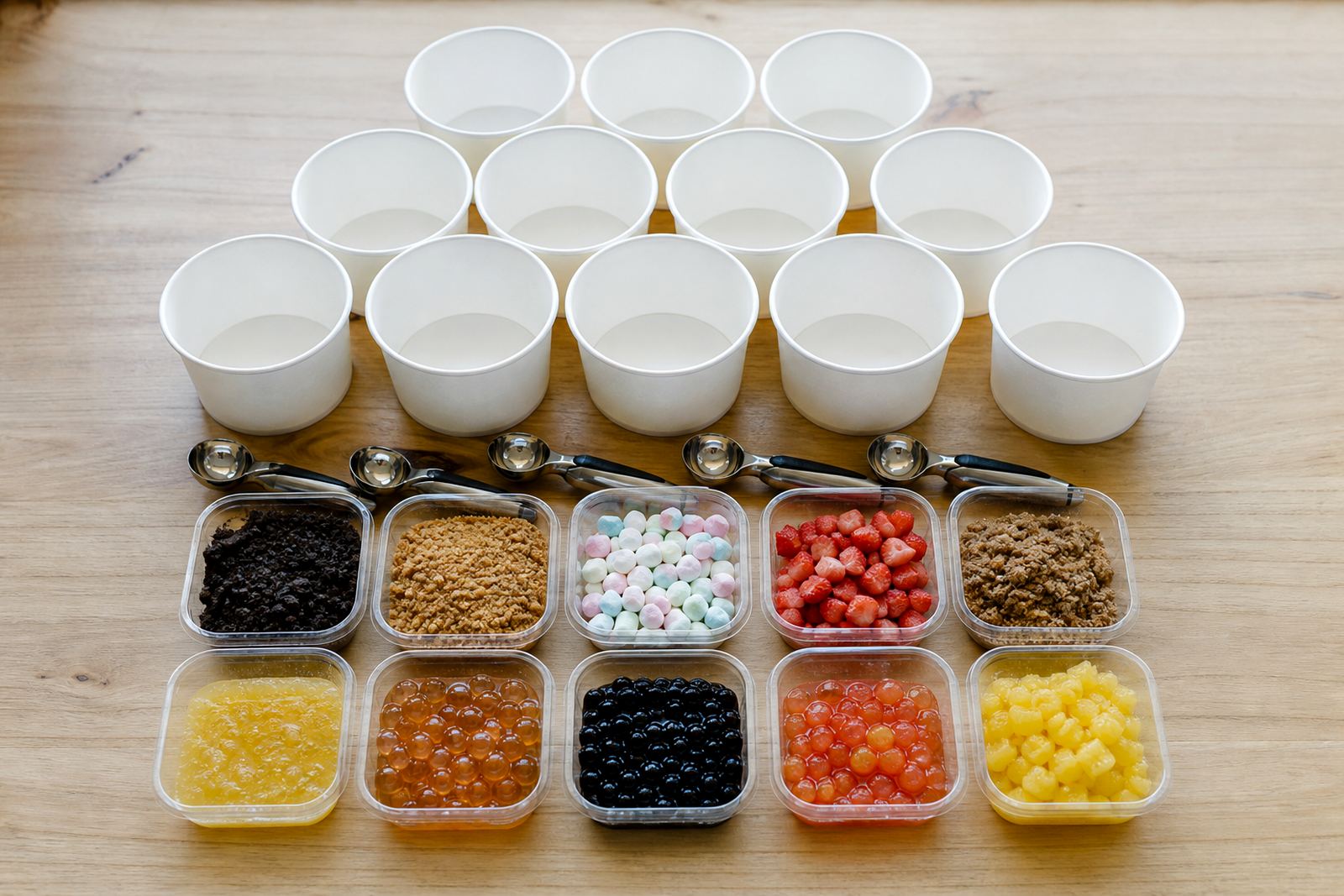
- Drop-off cups: best for schools, meetings and simple service plans
- Custom menu catering: best when age groups or tastes differ widely
- Large group catering: ask for a split between best sellers and variety items
Use Event Timing to Set Portion Size
The time of day affects appetite. Afternoon functions often need lighter portions, while evening celebrations after a meal may only need a sweet finish. If you are planning a birthday at home in Durban or a graduation gathering in Pietermaritzburg, think about what has already been served. Guests who have had a full lunch usually take a smaller serving than those arriving for dessert-only service.
For public events, timing is just as important. Early birds tend to buy quickly, and then there may be a lull before the main crowd arrives. That is why a catering plan should include a clear idea of when the busiest 60 minutes will happen. A school fair, for example, may need extra stock ready by the first break. A festival stand may need a second wave ready for the late afternoon rush.
As a rough guide, use these serving patterns:
- Before lunch: moderate appetite, especially for families and children
- After lunch: lighter portions work well
- Evening events: plan for dessert as a treat, but expect return visits if the event is lively
- All-day festivals: build in stock for two busy peaks, not one
Build a Safety Margin Without Overbuying
No one wants waste, especially at coastal venues where humidity can affect holding time and presentation. But under-ordering can also leave guests disappointed. A sensible buffer is usually 10 percent for private functions and 15 percent for busy public events. In bigger cities like Johannesburg, where traffic can push guests to arrive later than planned, a buffer is often the difference between a smooth finish and a rushed last round.
Keep the buffer in mind when choosing flavours and toppings too. If you are serving children, keep at least one familiar option in a larger quantity. For adults, a balance of a classic flavour and something more playful usually works well. If your function is outdoors, also factor in access, shade and serving order so the product stays appealing right through service.
Practical buffer tips:
- Private parties: add 10% for last minute guests and extra servings
- Corporate and school events: add 10 to 15% if the guest list is not final
- Outdoor functions: allow extra time for service in warm weather
- Coastal venues: keep the service line moving to limit melt and soften
A Local Example: 120 Guests in Umhlanga
Here is how the numbers can work in real life. Say you are hosting a 120-person birthday in Umhlanga on a Saturday afternoon. The event is at a home, there is a main meal first, and dessert is served afterwards. A sensible estimate would be 95 to 100 portions if most guests are confirmed, then a small buffer of 10 extra servings for unexpected arrivals or second helpings. That gives you enough room without overcommitting.
If the same event were a corporate family day in Durban with children, employees and partners all attending, the count may change. Adults may take one portion, while some children may prefer a smaller serve. In that case, it can help to separate the group into likely eaters and light eaters. A practical plan might be 80 full portions and 25 smaller or shared portions, then a reserve for the busiest part of the day.
When in doubt, think in these blocks:
- 1 portion per confirmed guest for dessert-led events
- 0.75 portion per guest for events with a full meal before dessert
- Extra 10 portions for a medium-sized buffer at private gatherings
- Extra 15 portions when there will be walk-ins or public foot traffic
What to Share When You Send an Enquiry
The more detail you give upfront, the more accurate the portion plan will be. Share the event type, date, venue, time, estimated guest count, and whether you want live serving, drop-off cups or a full catering setup. If there are children, school rules, venue restrictions or access limits, mention those as well. That helps avoid delays on the day and makes planning easier for everyone involved.
It also helps to mention the towns on your route if you are comparing options across KwaZulu-Natal or Gauteng. An event in Hillcrest, for example, may need a different setup from one in Sandton due to venue access, parking and service timing. If you are unsure about quantities, ask for help with the guest count split, not just the final total. That is often where the best answer comes from.
- Event type and occasion
- Date, time and venue area
- Total guest count and any children
- Service style and serving window
- Any venue rules, access limits or outdoor conditions